
When you search for structured cabling services near me, you’ll probably get a long list of contractors, IT companies, and electricians who all claim they can handle the job. But structured cabling isn’t just about pulling wire from point A to point B. It’s the foundation of your entire network, every phone call, data transfer, security feed, and Wi-Fi connection runs through it. A bad install doesn’t just cause headaches now; it creates compounding problems for years.
That’s exactly why choosing the right contractor matters more here than with most other trades. You need someone who understands commercial-grade infrastructure, follows industry standards, and builds systems that scale as your business grows. At CommX Networks, we’ve spent 18 years designing and installing structured cabling for commercial facilities across Southwest Florida, from warehouses and distribution centers to office complexes, so we know what separates a quality install from a liability.
This article breaks down five practical tips to help you evaluate your options and hire the right cabling provider. Whether you’re building out a new facility or upgrading aging infrastructure, these guidelines will help you make a confident, informed decision.
1. Start with a local commercial cabling partner
When you’re searching for structured cabling services near me, geography is more than a convenience factor. A local partner knows your regional building codes, understands the climate conditions that affect cabling in Southwest Florida, and can actually show up when something needs urgent attention. That kind of proximity and accountability is difficult to replace on a commercial project with tight timelines.
Why local experience matters for commercial jobs
Commercial facilities have different demands than residential installs. Warehouses, distribution centers, and multi-floor office buildings require longer cable runs, more complex MDF and IDF configurations, and coordination with other trades on site. A contractor with local commercial experience has dealt with these environments before and knows how to plan around common obstacles before the first cable gets pulled.
A contractor who has worked in your type of facility will anticipate problems before they appear on the job site.
What to verify about coverage and response times
Ask any contractor directly whether they service your specific location and how quickly they can respond to a service call. Some companies list large regions on their website but don’t staff crews nearby. Verify that their physical operations are close enough to support your site within a reasonable timeframe when issues come up after the install is complete.
How to gauge fit for your facility type and size
Not every cabling contractor has experience inside large-footprint commercial buildings. Ask for references or project examples from facilities similar to yours in square footage, cable volume, and complexity. A contractor who has wired a small office may struggle with a 100,000-square-foot warehouse that requires dense access point placement and extended horizontal cable runs throughout the structure.
Red flags that signal a poor match
Watch out for contractors who price a job without visiting your site or reviewing floor plans. Remote quotes on commercial cabling projects almost always produce scope gaps later. Be cautious if a contractor cannot name specific past projects in your region or your industry.
2. Confirm licensing, insurance, and compliance
Before you hire any contractor from your search for structured cabling services near me, verify their credentials first. Florida has specific licensing requirements for low-voltage contractors, and skipping this step can expose your business to code violations and expensive rework down the line.
Licenses and certifications to look for in Florida
In Florida, commercial cabling contractors must hold a state-registered or state-certified low-voltage contractor license. Look for technicians who also carry BICSI certifications, which confirm they meet recognized industry standards for design and installation quality.
- State low-voltage license: Required for commercial cabling work in Florida
- BICSI INST1 or RTPM certification: Confirms hands-on installation competency
- Manufacturer certifications: Often required for warranty coverage on installed cable and components
Insurance and safety requirements that protect your site
Any contractor working on your property must carry general liability insurance and workers’ compensation coverage. Request certificates of insurance before work begins. Without adequate coverage, an injury on your site or damage to your equipment becomes your financial liability.
Always verify insurance certificates directly with the issuing provider before allowing work to start on your facility.
Permitting and coordination with building management
Some commercial jobs require permits, especially when work involves penetrations through fire-rated walls or new conduit runs. A qualified contractor will manage this process and coordinate directly with your building management team to keep the project compliant throughout.
Red flags that create liability and rework
Watch out for contractors who suggest skipping permits to save time or cut costs. That approach leads to failed inspections, mandatory removal of installed cabling, and repeat labor charges that far exceed what the permit would have cost.
3. Look for standards-based design and documentation
When evaluating structured cabling services near me, design quality separates professional contractors from those who simply pull wire. A contractor who follows ANSI/TIA-568 standards builds a system that performs predictably and supports future upgrades without a complete overhaul.
How a good cabling design prevents bottlenecks later
A standards-based design accounts for cable pathways, bend radius limits, and maximum run lengths before installation begins. This upfront planning prevents performance degradation and avoids situations where your network slows down under load because corners were cut during the layout phase.
A properly designed cabling infrastructure can support your network for 15 to 20 years without major rework.
Documentation you should expect from day one
Your contractor should deliver as-built drawings and a complete cable schedule once the job is finished. These documents show every run, termination point, and panel port assignment, giving your IT team a clear map of the entire infrastructure.
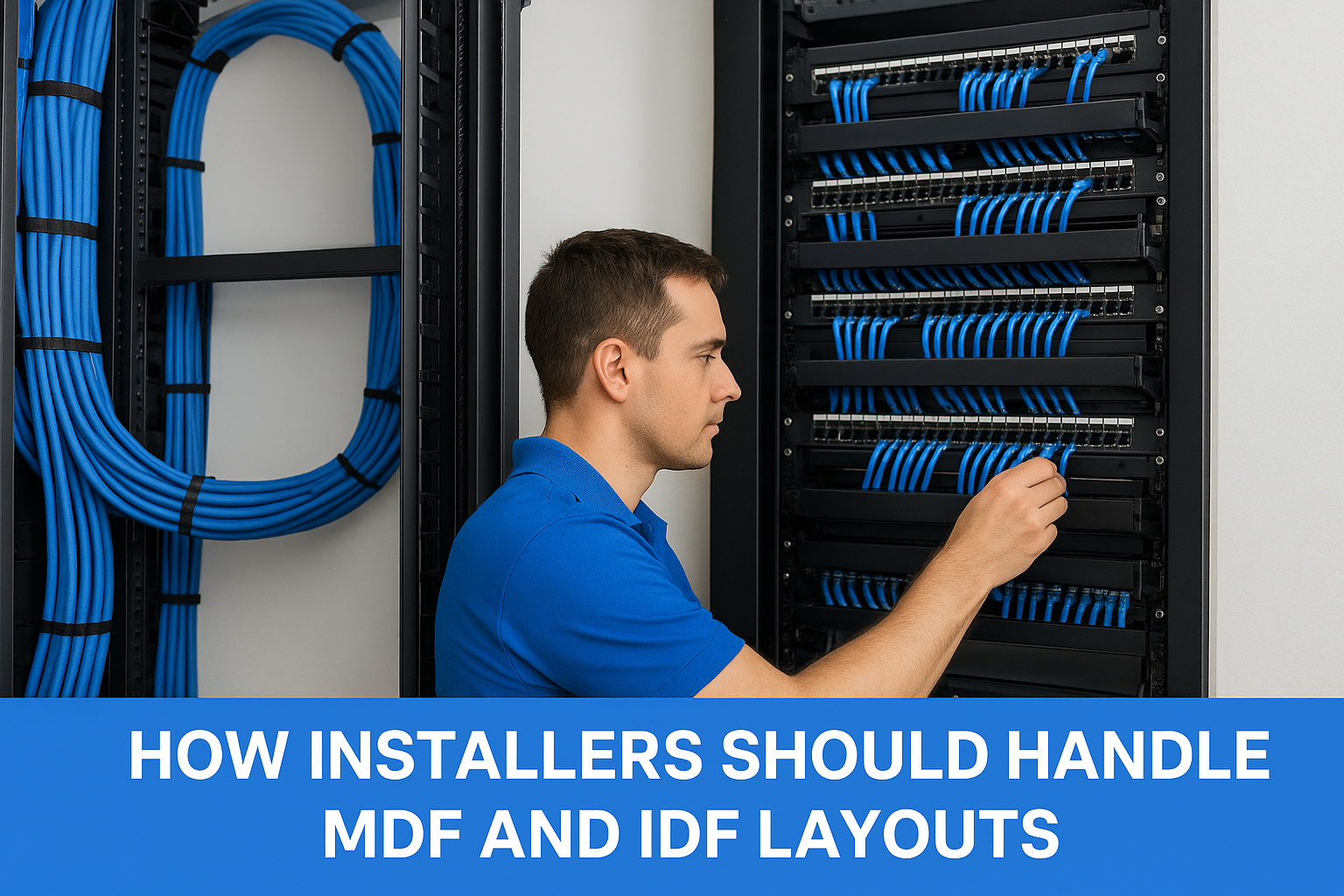
How installers should handle MDF and IDF layouts
Main distribution frames and intermediate distribution frames must be organized, labeled, and built with room to grow. Proper rack spacing, patch panel alignment, and cable management hardware keep your closets clean and make future changes faster.
Red flags that lead to messy closets and downtime
If a contractor cannot provide sample documentation or skips pre-installation drawings, that signals a reactive approach. Disorganized closets and undocumented runs create troubleshooting nightmares that cost far more to fix than the original install.
4. Require testing, labeling, and clear deliverables
When you narrow down your search for structured cabling services near me, don’t let the conversation stop at installation. A professional contractor proves their work through verified testing results, consistent labeling, and complete closeout documentation before they leave your facility.
Testing requirements for copper and fiber links
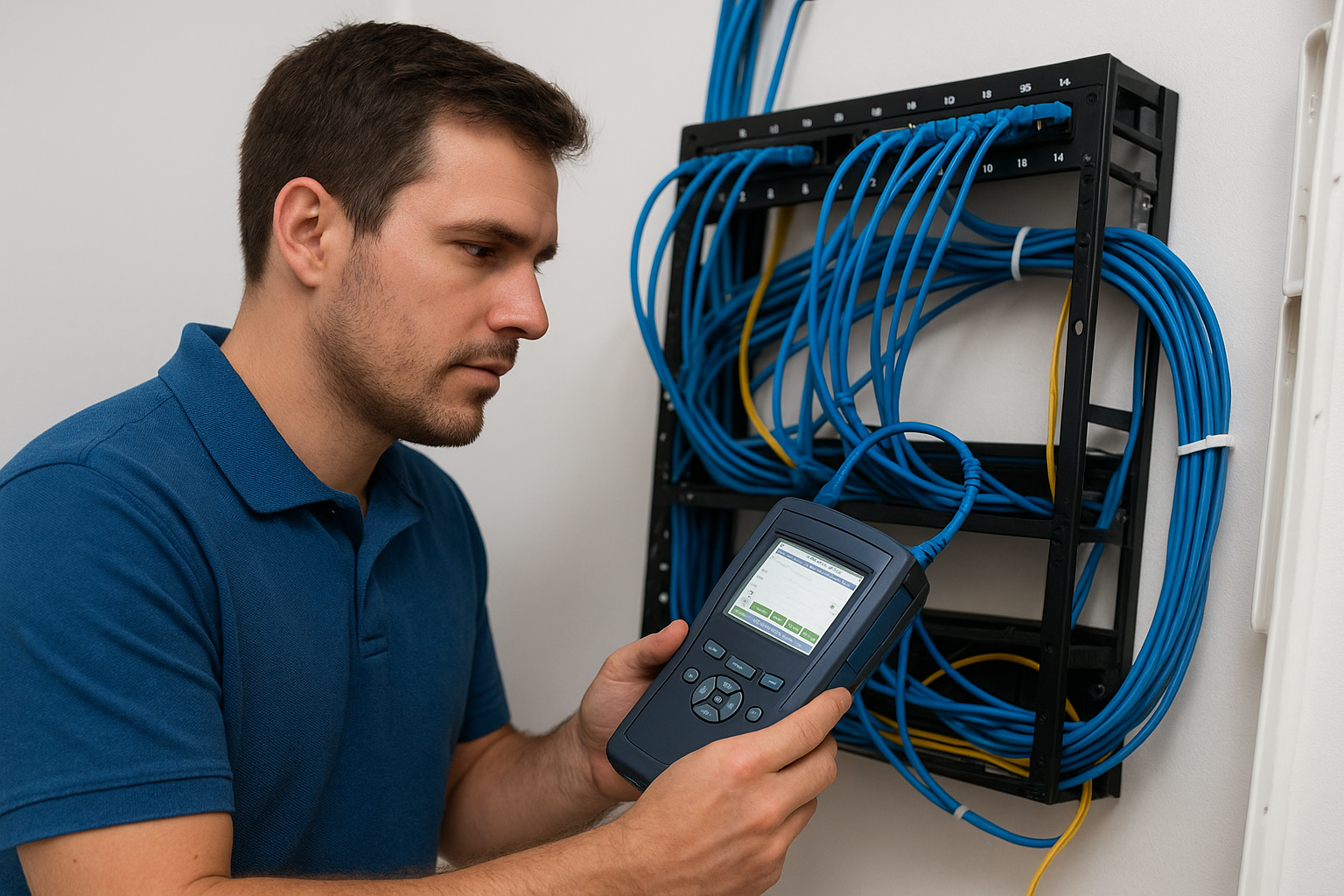
Every copper run should pass TIA-568 performance testing using a certified cable tester, and your contractor should hand over the actual test reports. Fiber links require insertion loss and return loss verification to confirm the install performs at rated specifications.
Labeling and cable management practices that scale
Consistent labeling at both ends of every cable run makes future troubleshooting faster and reduces downtime when changes are needed. Contractors should also use proper cable management hardware, including trays, D-rings, and Velcro ties, to keep runs organized inside closets and above ceilings.
A well-labeled infrastructure cuts troubleshooting time significantly when your IT team needs to isolate a problem quickly.
Closeout deliverables that make IT support easier
Request a complete closeout package that includes test reports, as-built drawings, and a port schedule for every panel. These documents give your team a clear reference point for every connection in the building without requiring a contractor callback.
Red flags that show up after the install
Be cautious of contractors who deliver no test documentation or provide only verbal confirmations. Missing records and unlabeled cables create confusion that compounds over time, especially when staff turns over or the facility expands.
5. Evaluate long-term support and scalability
The right contractor for structured cabling services near me doesn’t finish the install and disappear. Your infrastructure needs to keep pace with your business, and your cabling partner should have a clear plan for supporting that growth well beyond the initial project closeout.
How to plan for growth with Cat6, Cat6A, and fiber
Cat6A supports 10-gigabit speeds up to 100 meters, making it the stronger long-term investment for high-density commercial environments. Pairing that with fiber backbone runs between your MDFs and IDFs positions your infrastructure to handle bandwidth demands well beyond what your operation currently requires.
- Cat6: Supports up to 1 Gbps, suitable for standard office environments
- Cat6A: Supports up to 10 Gbps, ideal for future-proof commercial builds
- Fiber: Handles long backbone runs with no bandwidth ceiling
Support options for moves, adds, and changes
Ask your contractor directly about service agreements for moves, adds, and changes. A contractor without a structured support plan leaves you managing emergency callbacks every time your team grows or your floor layout shifts.
A contractor who offers ongoing MAC support reduces both your downtime and your total infrastructure cost over time.
How to align cabling with Wi-Fi, cameras, and paging
Your cabling plan should account for access point locations, security camera endpoints, and paging system runs from the start. Planning these systems together prevents redundant labor and conduit conflicts that inflate retrofit costs later.
Red flags that increase total cost over time
Contractors who install minimum-spec cabling without reviewing your growth plans create infrastructure that fails to scale. Replacing undersized cable within five years costs far more than choosing the right materials from the beginning.
Next steps
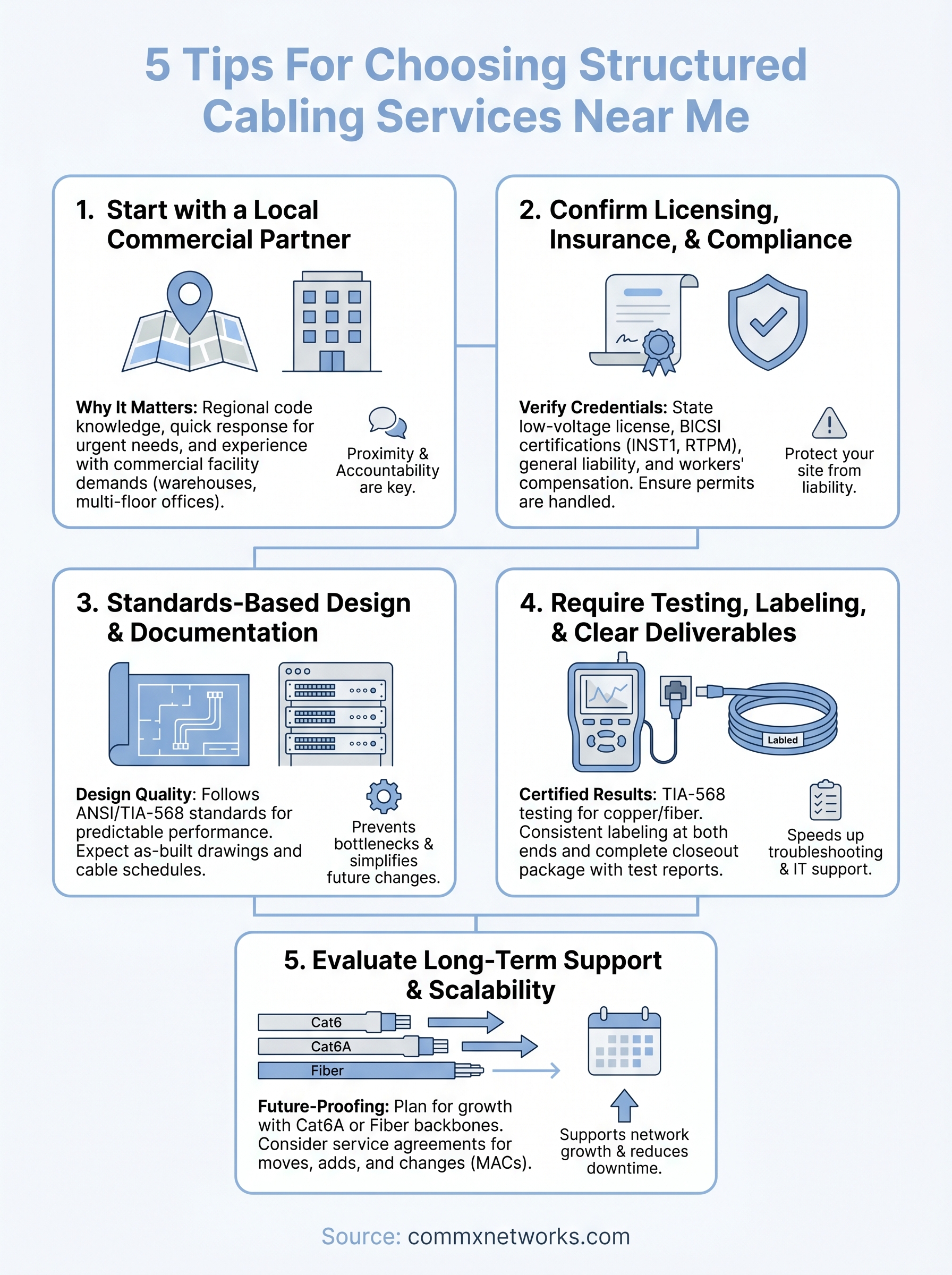
Choosing the right contractor from your search for structured cabling services near me comes down to five things: local commercial experience, verified credentials, standards-based design, complete testing and documentation, and a clear plan for long-term support. Each of these factors directly affects how your network performs today and how well it holds up as your operation grows.
Most cabling problems aren’t discovered during the install. They surface months or years later when your team can’t isolate a fault, your bandwidth hits a ceiling, or a facility expansion exposes gaps in the original design. Hiring a contractor who gets these details right from the start saves you significantly in rework, downtime, and emergency service calls.
If you manage a commercial facility in Southwest Florida and want a cabling infrastructure built to last, contact CommX Networks to discuss your project and get a site assessment from an experienced local team.